
 Chris Inglis
MotoGP 26 is developer Milestone’s latest iteration to the annual series which launched on PC and consoles on April 29, 2026. I missed MotoGP 25 last year and it clearly shows I missed a lot as it was a big turning point for the series. It moved the franchise to Unreal Engine 5, introduced overhauled bike audio recorded on-site, added dirt-track and minibike Race Off training disciplines, and completely tore up the elitist rulebook by creating a dedicated, accessible alternative physics engine.
Stepping onto the grid for MotoGP 26 on Xbox Series X, the real test isn’t just whether Milestone can make a gorgeous motorcycle simulator as they have proven they can. The test is how much they have iterated on that massive 2025 formula shift, and whether it holds up for a returning veteran of MotoGP 24. The short answer? This year’s entry takes all those foundational 2025 pillars, smooths out the rough edges, and introduces a highly targeted physical refinement that completely changes the feel of the race.
MotoGP 26 boots you directly into a mandatory onboarding tutorial before you even see the main menu. It’s a brilliant inclusion that serves as a quick mechanical palate cleanser. It forces you to instantly throw out my car racing habits from Forza Horizon 6 like late braking and aggressive corner cutting and helps re-establish that distinct muscle memory required for bike racing.
After the tutorial races, the game asks you to choose your path: the accessible Arcade Experience (which I chose) or the uncompromising Pro Experience. Choosing Arcade strips away the brutal learning curve by layering in robust Neural Aids, giving casual riders a tailored safety net. Meanwhile, the Pro option remains a highly customisable and deep playground for the purists who want to manage every ounce of bike geometry and brake pressure manually.
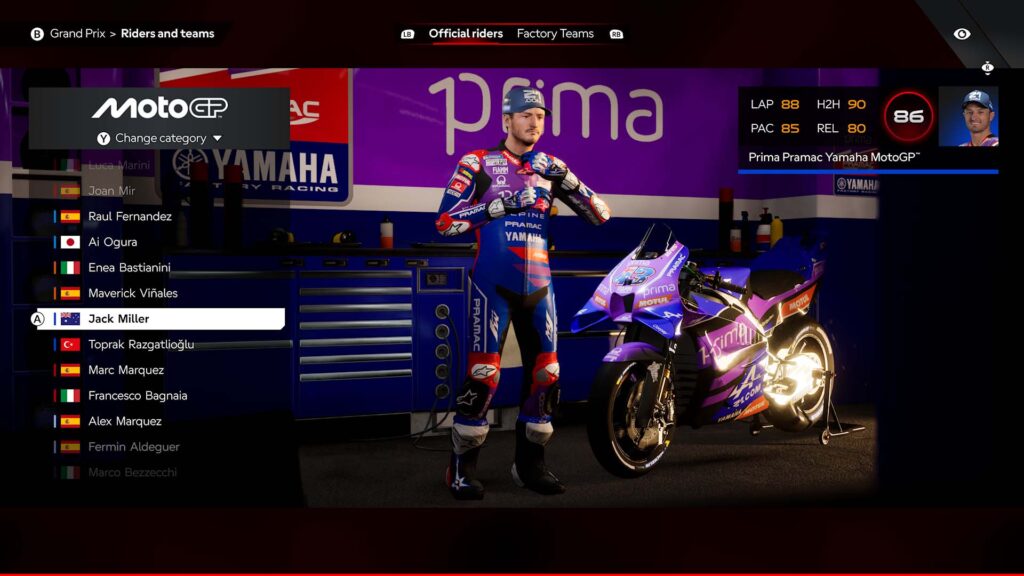
Naturally, when looking for a rider to pilot through this new season, I immediately looked for some local representation and chose to race as Jack Miller who happens to be the lone Australian rider available for selection on the grid. Once you break into the MotoGP 26 core game modes, the flexibility of the Grand Prix weekend structure stands out. Milestone offers three distinct ways to play:
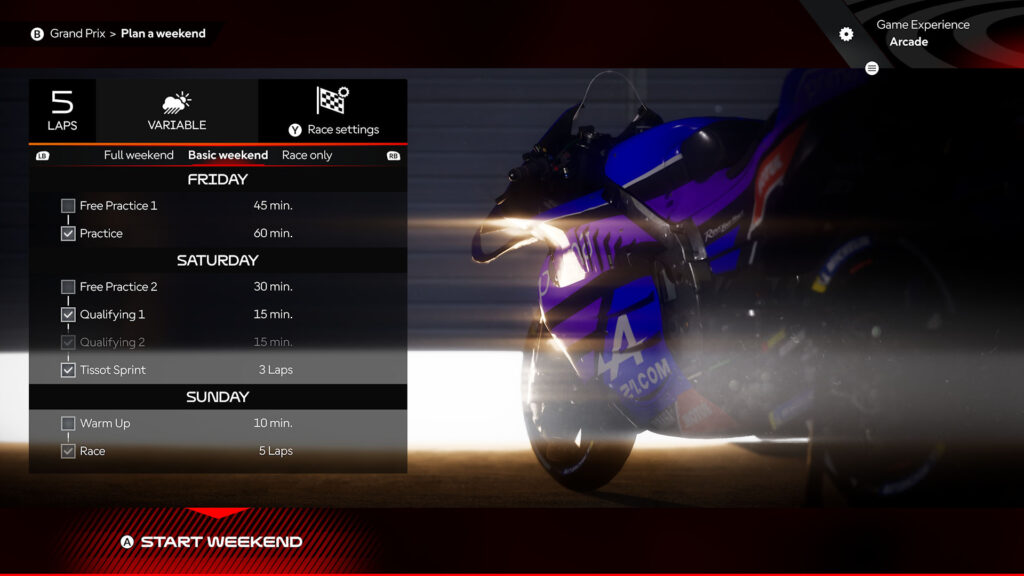
- The Full Weekend: For the purists who want every practice session, qualifying knockout, and warm-up.
- Condensed Weekend: A streamlined version that lets you sample the track without eating up hours of real time (my personal preference).
- Straight to Grid: Dropping you directly into the middle of the pack for pure, immediate racing action.
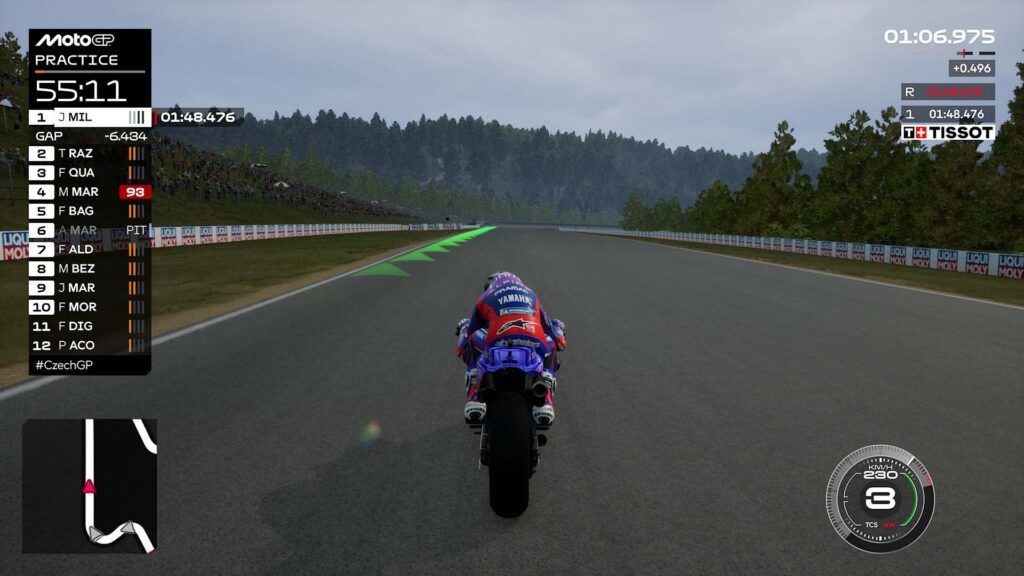
While jumping straight to the grid is tempting when you’re short on time, taking advantage of the practice and qualifying sessions is essential. Track acclimation makes or breaks your race. Spending those few laps learning your braking markers, identifying which corners permit early throttle acceleration, and finding the correct racing line is the difference between standing on the podium or eating tarmac.
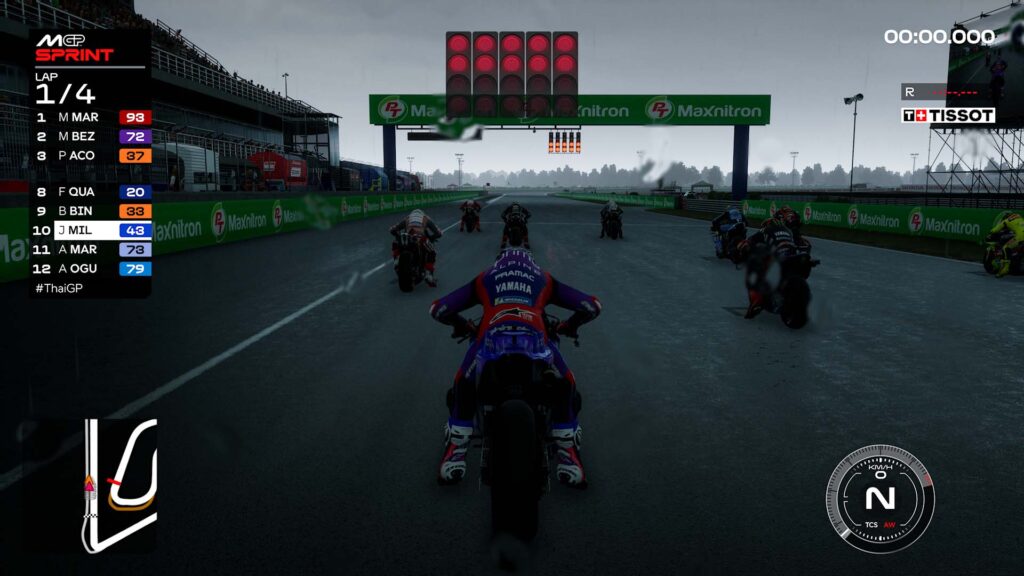
The importance of that track knowledge becomes incredibly apparent the moment the weather turns. After a few initial grand prix races, I dove straight into the Championships. The very first event greeted me with a torrential downpour at the Chang International Circuit in Thailand. Up until that point, all my races had been on dry tracks, so it was a swift smack to my confidence as I slid out on almost every corner. Fortunately, the inclusion of the rewind system acts as an invaluable teaching tool here. Instead of ruining an entire championship run over a single mistake, it allows you to instantly roll back time, adjust your entry angle, ease off the brakes, and figure out exactly how to survive the slick track conditions in real-time.
One noticeable quirk of choosing the Arcade Experience is the aggressive nature of the AI paddock. Because the arcade presets feature far more lenient penalty systems for minor track infractions and collisions, the offline races frequently devolve into an intense, paint-trading tussle with fellow racers. While a real MotoGP race would see severe penalties or stewards’ inquiries for such aggressive riding, the Arcade mode lets you get away with plenty of elbow-rubbing and aggressive block-passes. It sacrifices a bit of official motorsport realism for pure, chaotic racing fun, which fits the mode’s philosophy perfectly.
The Career Mode has received the structural facelift it desperately needed, building on the paddock infrastructure introduced in 2025. It now features a fully 3D paddock hub alongside Thursday press conferences and personal managers. Your responses to the media directly manipulate your relationships with other teams and influence your own team’s morale, which in turn impacts your bike’s developmental trajectory. It’s been seen in games like this before but adds that element of consequence for your off-track actions.
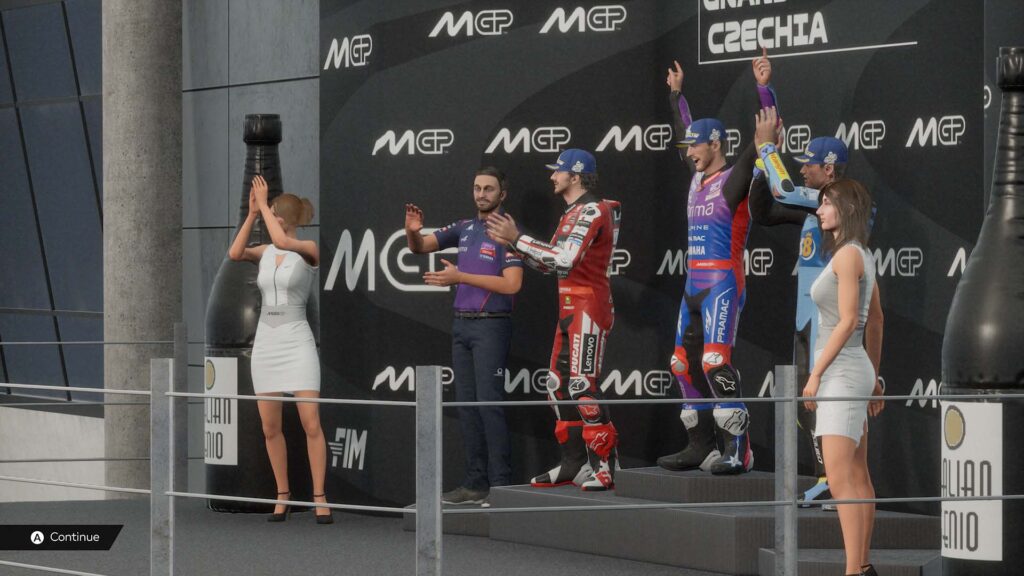
The most intriguing new feature for MotoGP 2026 is the introduction of Dynamic Rider Ratings. Tied directly to real-world performance, these ratings update dynamically throughout the season. It injects an element of unpredictability into the AI paddock; riders who are having a stellar real-life season carry that hot streak directly into your offline races, completely altering who you are fighting on the podium from month to month. To celebrate this meta-layer, Milestone added a collectible card system tracking your progress, which is a neat cosmetic touch for completionists.
Outside of the main paddock, the cross-training disciplines that debuted in ’25 (Flat Track, Motard, and Minibikes) have been expanded with a brand-new Canterbury Park location and the inclusion of high-performance Production Bikes in single-brand events. Each discipline features dedicated physics models that require you to throw out your GP braking markers and adapt to entirely different styles of riding.
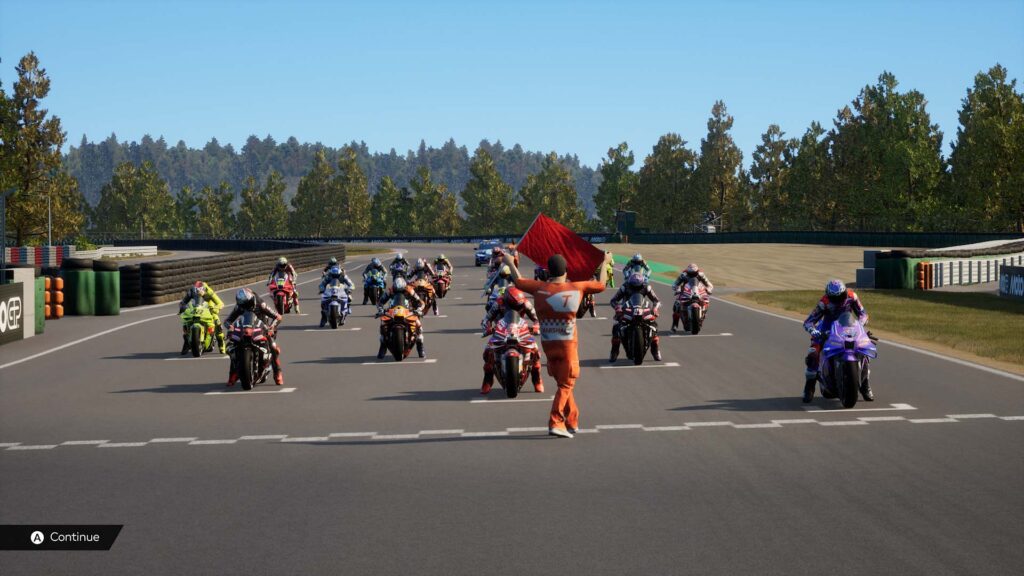
Visually, the game looks great on the Xbox Series X though it was hard to tell the difference graphically coming from MotoGP 24 into this one. The asphalt texture detail, the roaring sound effects of the re-recorded engine notes, the heat haze rising from the exhaust, and the way track surfaces reflect dynamic weather conditions are still top-tier. It runs at a buttery-smooth 60 FPS even when diving into a packed 22-rider turn one.
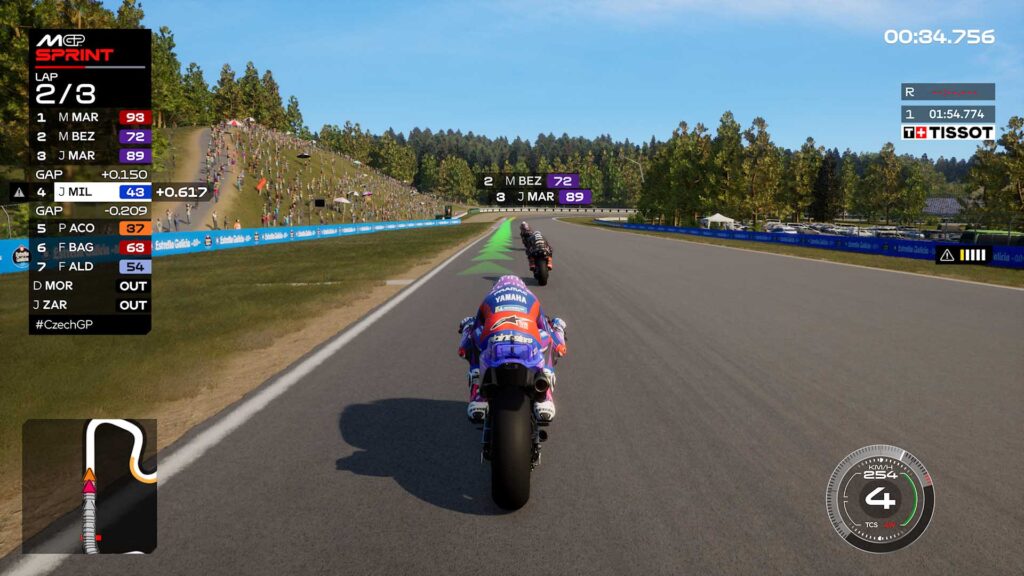
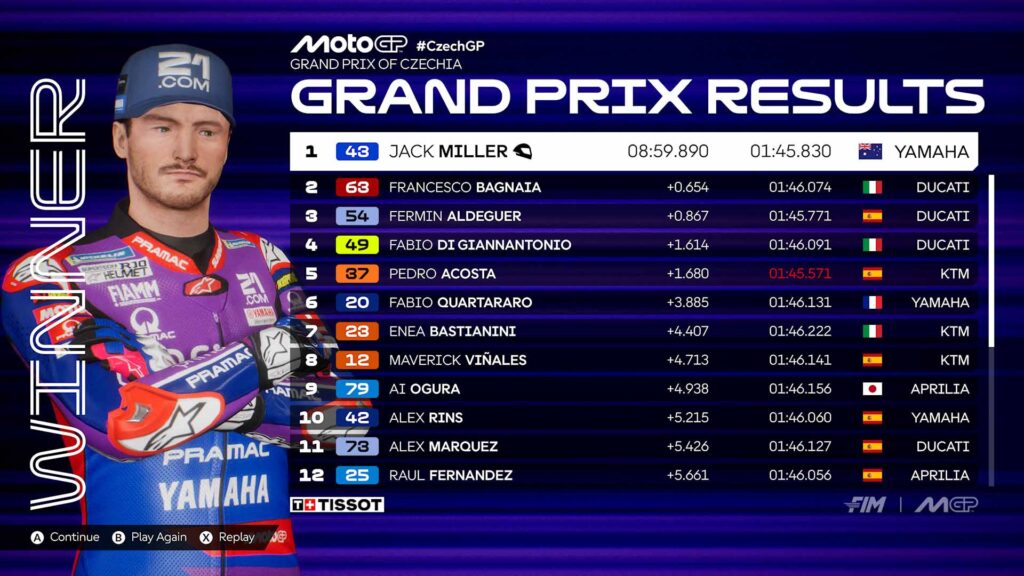
Overall, MotoGP 26 provides an optimised, highly responsive, and varied racing package that makes the sport accessible without losing its mechanical soul. It doesn’t reinvent the wheel, but it refines the hands on the handlebars. By shifting the physics focus toward authentic rider body weight movement and smoothing out the arcade accessibility features built over the last two years, Milestone has successfully prevented the series from feeling stagnant. It’s an easy recommend for bike racing fans.
This review utilised an Xbox key provided by Plaion ANZ and MotoGP 26 is available now on Steam, Xbox, PlayStation, and Nintendo Switch.
#roundtablecoop


 Yonan
Yonan
 Str8JaktJim